

The Hidden Corrosion Inside Your Boat's Prop Hub (And What It's Telling You)
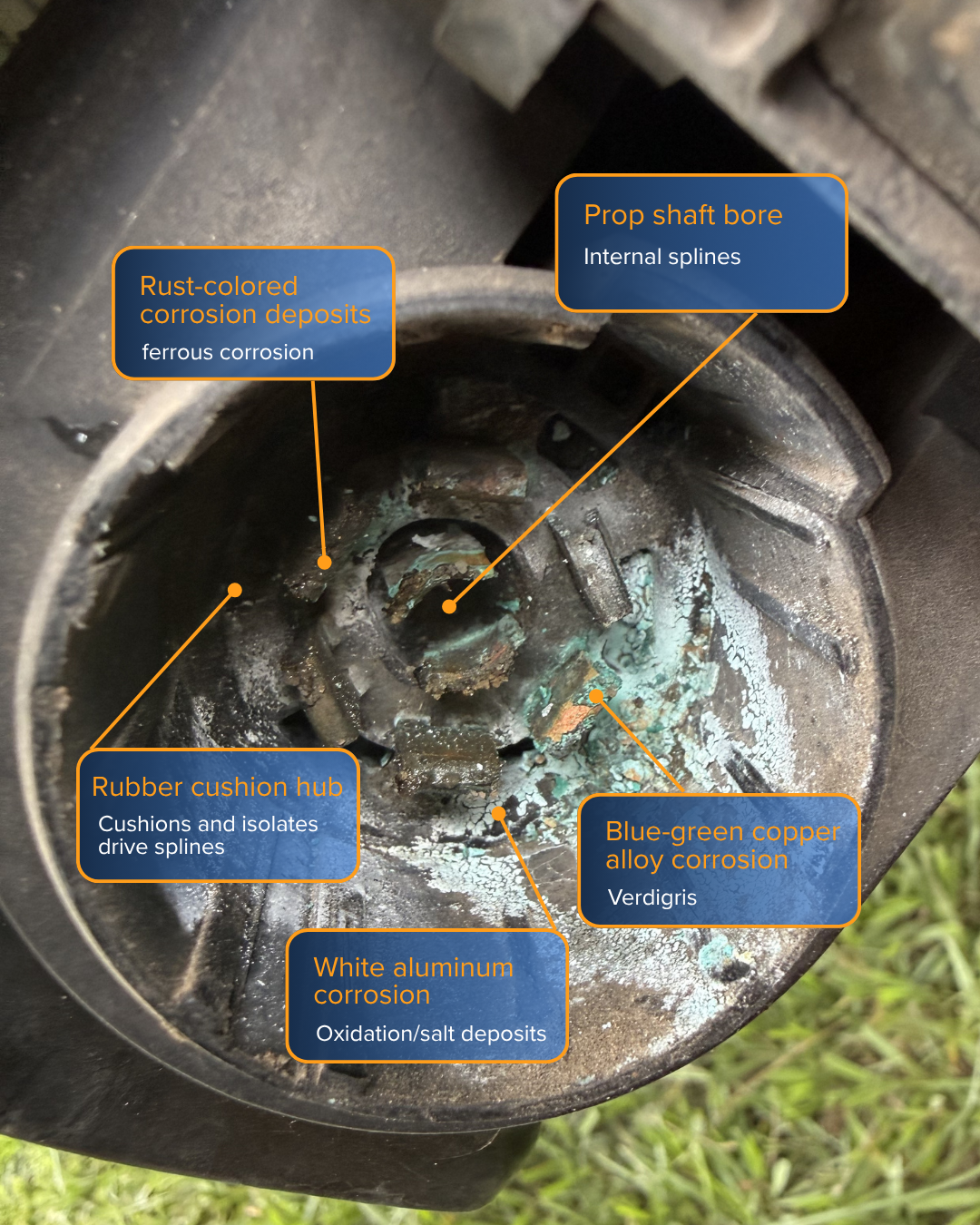
If you saw our recent post asking "what's growing inside this boat engine," you already know the photo looks alarming. A prop shaft bore covered in rust, blue-green crust, and chalky white buildup is not something most boat owners expect to see up close. But this kind of boat engine corrosion is more common than you might think, and each color and texture tells a different story about what is happening beneath the surface.
At Dees Marine, we pull apart lower units and prop hubs like this on a regular basis. Below, we break down exactly what you are looking at, why it forms, and what it means for the health of your boat.
Why Boat Engine Corrosion Happens in the First Place
Marine engines live in one of the harshest environments an engine can face. Saltwater, moisture, dissimilar metals, and constant vibration create the perfect conditions for corrosion to take hold, especially in tight spaces like the prop shaft bore where water and debris can sit undisturbed for long periods.
Once boat engine corrosion starts, it rarely stays contained to one spot. It spreads along metal surfaces, works its way into seals, and can eventually affect the fit and function of parts that are supposed to move freely, like the prop shaft and cushion hub.
Breaking Down What You're Seeing
Rust-colored corrosion deposits (ferrous corrosion) This is the classic reddish-brown buildup most people recognize instantly. It forms when iron or steel components are exposed to moisture and oxygen over time. In a prop hub, ferrous corrosion often signals that water has been getting into areas it should not, whether from a worn seal, a cracked housing, or simply age and lack of maintenance.
Blue-green copper alloy corrosion (verdigris) The blue-green crust you see in the image is verdigris, a corrosion byproduct that forms on copper and copper alloy parts, common in bronze or brass bushings and fittings. Verdigris develops faster in saltwater environments and is often a sign that the part has been submerged or exposed to moisture for an extended period without protection.
White aluminum corrosion (oxidation and salt deposits) The chalky white buildup is oxidation on aluminum components, frequently made worse by salt deposits left behind after the boat dries. Aluminum corrodes differently than steel or copper, and this white powdery residue is a telltale sign that the metal has been reacting with its environment for some time.
Prop shaft bore and internal splines This is the core of the assembly, the bore where the prop shaft seats and the splines that transfer engine power to the propeller. When corrosion builds up here, it can affect how well the shaft seats and how efficiently power transfers to the prop.
Rubber cushion hub The rubber cushion hub cushions and isolates the drive splines, absorbing shock during shifting and protecting the drivetrain from sudden impacts. If corrosion works its way around this component, it can compromise the cushioning effect and put more stress on the gearcase over time.
What This Means for Your Boat
Seeing multiple types of corrosion in one small area is usually a sign of a bigger issue, not just cosmetic buildup. It often points to:
Water intrusion through a failed seal or gasket
Galvanic corrosion caused by dissimilar metals in contact with each other
Lack of regular maintenance or inspection
Extended exposure to saltwater without proper rinsing or protection
Left unaddressed, boat engine corrosion like this can lead to reduced performance, shifting problems, shaft misalignment, and eventually costly repairs to the lower unit or gearcase.
How to Prevent This From Happening to Your Boat
Rinse your engine and lower unit with fresh water after every saltwater use
Inspect prop shaft seals and bushings at least once a season
Replace worn or corroded sacrificial anodes before they fully deplete
Have your prop removed and the shaft inspected annually, even if performance seems normal
Address any signs of corrosion early, before it spreads to internal components
Corrosion like this rarely announces itself until performance issues show up. Catching it early during routine maintenance is almost always cheaper and easier than waiting for a breakdown.
Bring It In Before It Spreads
If you have not had your prop shaft or lower unit inspected recently, now is a good time. At Dees Marine, we can pull the prop, check for corrosion, and catch small issues before they turn into expensive ones. Reach out toschedule an inspectionand keep your boat running the way it should.